
Break Into a Cybersecurity Analyst
Role in Months.
Practice in real-world environments. Get clear career guidance. Show up ready for real hiring conversations.
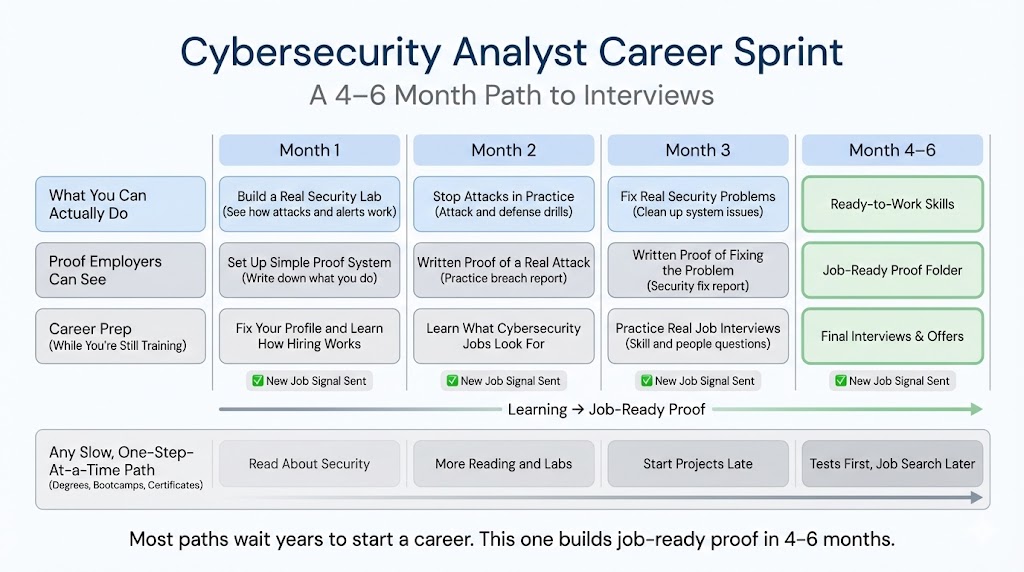
Jobs Are Changing Fast. Cybersecurity Is One of the Few Careers Growing.
Jobs built on routine and repeatable tasks are already being changed or removed by AI, and experts agree this shift will continue. Companies are cutting roles that are easy to automate, even in tech. At the same time, cybersecurity jobs keep growing. There are hundreds of thousands of open cybersecurity roles in the U.S. and millions worldwide. Government labor data shows these jobs are growing much faster than most careers because every company uses computers, data, and the internet—and all of it must be protected.
Cybersecurity is different because it cannot be automated away. It requires people who can think, spot risk, and make decisions when systems are attacked. As technology grows and systems become more complex, cyber threats increase, not decrease. That’s why demand stays high and why people with these skills gain more job options, better pay, and long-term safety. Starting earlier matters. It gives you time to build skills while demand is strong and competition is still manageable. This isn’t about guessing the future—it’s about responding to what is already happening.
Our Coaches Have Helped Students Land Jobs At...





Why Now Matters
Cybersecurity jobs are open right now because there are not enough trained people to fill them. Companies are hiring faster than people can skill up, which keeps demand high and standards reasonable. But that does not stay true forever. As more people see cybersecurity as a safe path, more applicants enter the market, and employers raise the bar. Waiting does not keep the door open. It slowly makes it harder to walk through.
At the same time, AI and automation are changing jobs faster each year. Roles that feel stable today are being reshaped or removed, while cybersecurity work keeps growing because companies cannot pause security. Starting now gives you time to build skills before competition increases and before more jobs are affected. The people who benefit most are not the ones who wait for certainty. They are the ones who act while the signal is already clear.

How You Get Job Ready

Hands On Prep That Supports Job Readiness
Build and secure real networks, analyze live traffic, investigate incidents, and work inside SOC style environments from day one.
Industry Certification That Employers Recognize
Prepare for and earn Security+, Network+, and HTB Certified Defensive Security Analyst credentials to validate your skills.
Real World Projects That Stand Out
Build a SIEM, create a phishing attack simulator, and deploy an intrusion detection system to prove what you can do not just what you studied.
Career Preparation That Starts Before Graduation
Learn how to interview, position your experience, and present yourself as a job ready cybersecurity analyst.
Tailorded Coaching from resume to interview success.
Work directly with a career coach focused on resumes, applications, and job readiness not just coursework.
A Clear Roadmap From Day One
Know exactly what to learn, what to build, and what roles you are preparing for so you never waste time guessing your next move.
How Candidates Develop
Hiring-Relevant Capabilities

Build the Foundations
Build a clear understanding of how systems work, where risk appears, and how security teams think about threats. This focuses on concepts and context, not tools alone.

Practice in Real-World Environments
Work inside practice environments that mirror real security scenarios. Analyze data, investigate situations, and apply judgment in conditions similar to live security teams.

Analyst-Level Thinking
Develop the ability to think through problems the way security analysts do — weighing risk, making decisions, and responding to evolving situations.
How Candidates Build Security Capability Over Time
Foundational Understanding
Develop a clear understanding of how modern systems work, where security risks emerge, and how security teams think about threats. This focuses on concepts, context, and awareness rather than tools alone.
Applied Security Environments
Work inside practice environments that mirror real security scenarios, including detection workflows, log analysis, and incident response decision-making. The focus is on judgment, analysis, and understanding how security teams operate in live environments.
This Is A Live-Fire Simulation.
Most people read about cybersecurity. Here, you step inside a virtual Security Operations Center to observe and interact with the kinds of situations security teams face in real life.
This section focuses on applied security scenarios that reflect how defensive security work is approached in real organizations.Participants interact with realistic data sets and simulated environments to explore how suspicious activity is identified, analyzed, and understood. The emphasis is on practical judgment, critical thinking, and applied analysis rather than theory alone.
Through scenario-driven exercises, participants examine security signals, investigate unusual behavior, and walk through the types of decision-making processes security teams use when responding to potential threats across enterprise environments. The goal is to build clarity around how security work is performed and how analysts think through real situations.
SIEM Operations Project
Participants interact with a simulated Security Information and Event Management (SIEM) environment to observe how security data is collected, correlated, and reviewed across systems.
This experience centers on examining alert patterns, exploring indicators of potential compromise, and understanding how security teams use SIEM platforms to gain visibility into network and system activity.
Through working with realistic security data, participants gain exposure to how SIEM tools support threat detection and incident investigation, and how analysts interpret signals within complex environments.
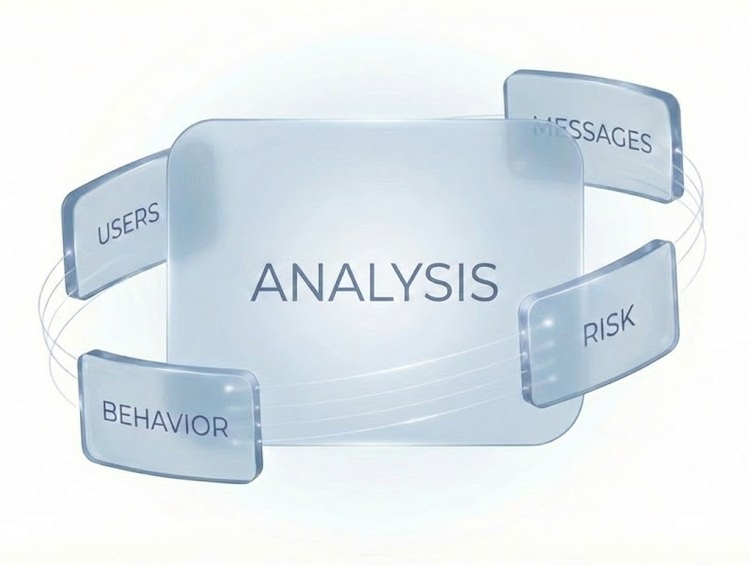
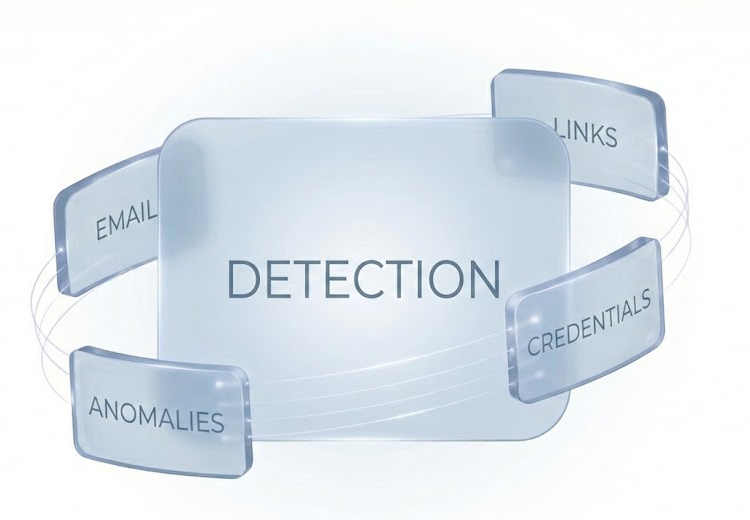
Phishing Attack Simulation Project
Participants examine simulated phishing scenarios to understand how social engineering threats are created, delivered, and identified within modern organizations.
This experience focuses on recognizing malicious signals, reviewing user behavior patterns, and understanding how security teams analyze and respond to phishing activity to reduce risk.
Through these scenarios, participants gain insight into how real-world attack techniques are evaluated and how defensive security controls are adjusted based on observed threats.
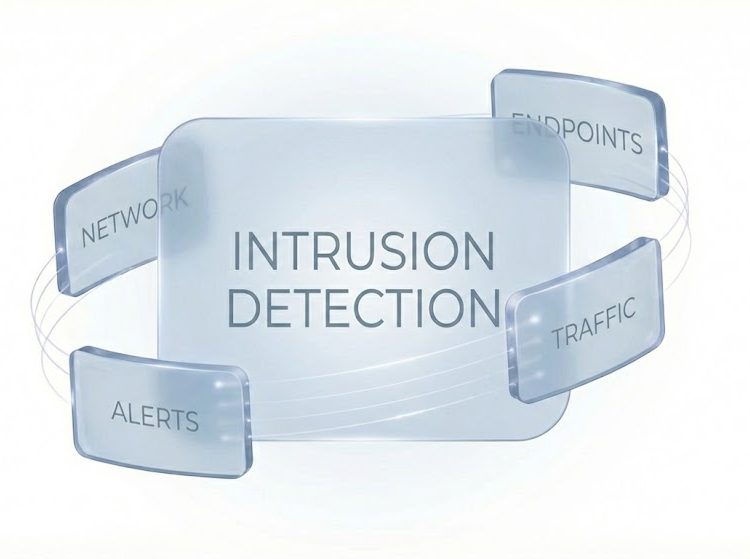
Intrusion Detection Project
Participants interact with a simulated intrusion detection environment to observe how network traffic is monitored and how unusual activity is identified within complex systems.
This experience emphasizes understanding normal versus abnormal network behavior, reviewing alert patterns, and exploring how security teams determine when activity may indicate a potential incident.
Through this exposure, participants gain insight into how detection tools are used to support investigations and how defensive monitoring strategies are strengthened over time.
How Defensive Security Skills Are Evaluated
As part of the professional exploration track, participants may choose to engage with third-party assessment frameworks commonly used within the cybersecurity field to better understand how defensive security knowledge is evaluated.
This exposure highlights areas such as SOC operations, threat detection, log analysis, and incident response workflows, offering insight into how security teams approach real-world defensive challenges.
Through this process, participants gain clarity on the types of analytical thinking, data correlation, and decision-making patterns expected within defensive security environments, without implying certification, qualification, or employment outcomes.
Industry-Recognized Certifications
CompTIA Network+
CompTIA Network+ is a widely recognized third-party certification that covers foundational networking concepts commonly referenced within cybersecurity environments.
These concepts include how networks are structured, how data moves across systems, and how security teams interpret traffic patterns and anomalies when reviewing activity. Understanding these fundamentals provides context for how security issues surface and how investigations are framed within modern environments.
This certification reflects how networking knowledge is evaluated within the industry and how foundational concepts support broader security analysis, without implying preparation, qualification, or employment outcomes.
CompTIA Security+
CompTIA Security+ is one of the most widely recognized foundational cybersecurity certifications in the world. It validates your understanding of core security concepts including threats, vulnerabilities, security operations, architecture, and risk management. Security+ demonstrates that you can apply security principles across networks, systems, and applications and is commonly required for entry level cybersecurity and SOC roles.
Through structured lessons and hands on labs, students build the knowledge and confidence needed to prepare for the Security+ exam and apply these concepts in real world defensive environments.
Hack The Box Certified Defensive Security Anaylst
The Hack The Box Certified Defensive Security Analyst credential is a third-party certification used within the cybersecurity field to evaluate applied defensive security knowledge in realistic scenarios.
It examines how candidates analyze security data, review alerts, correlate information across systems, and reason through incident response situations commonly encountered in enterprise environments.
The assessment framework reflects how defensive security concepts are evaluated in practice, including exposure to SIEM platforms, threat detection workflows, and investigative patterns used by security teams, without implying preparation, qualification, or employment outcomes.readiness for entry level cybersecurity analyst and SOC roles.
Tools & Environments You'll Explore
Security Monitoring Environments
Train inside security monitoring systems aligned with certification exam objectives, where logs are collected, alerts are generated, and security events are reviewed across networks and systems.
Analyst Investigation Workflows
Practice structured investigation workflows commonly covered on defensive security exams, including alert triage, event correlation, and incident analysis using repeatable, exam-relevant processes.
Hands On Lab Environments
Train in guided lab environments designed to reinforce certification concepts through simulated security scenarios, allowing you to analyze data, investigate threats, and apply defensive techniques in an exam-focused context.
What Real Progress in Cybersecurity Actually Looks Like
An actual example from inside the program showing how students move from fundamentals to real cybersecurity analyst work.
See how students gain hands-on experience through labs and real-world security scenarios
Understand why networking, continuous learning, and professional growth matter in cybersecurity
Get a realistic picture of the discipline and mindset required to succeed in the field
Inside the Program: Building Real-World Cybersecurity Experience
Excerpt from an actual training module inside Career Path Partners
What You’ll Practice for Certification Exams
Practice reviewing security alerts using SIEM platforms aligned with exam objectives
Analyze logs to recognize indicators of compromise commonly tested on exams
Examine phishing-based attack scenarios and appropriate response concepts
Explore how security data is correlated across endpoints, networks, and cloud systems
Review intrusion detection concepts and basic incident investigation patterns
Understand SOC-style workflows, including triage and escalation models referenced in exams
These capabilities reflect the types of concepts and scenarios commonly referenced in defensive security certification exams and help build familiarity with how security work is evaluated.
How Defensive Security Knowledge
Is Evaluated
This experience is designed to provide exposure to how defensive security work is approached in real world environments beyond theory or exam content alone. The focus is on understanding how security situations unfold and how decisions are made when potential threats appear.
Participants work through realistic security scenarios involving alert review, evidence analysis, risk evaluation, and investigative reasoning. The emphasis is on observing and practicing how security activity is examined and discussed rather than preparing for a specific role or outcome.
Guidance is provided on how to clearly explain these experiences including projects, labs, and third party certifications in professional conversations. This includes learning how to describe investigative thinking, decision making processes, and technical exposure in a clear and accurate way.
By the end of the experience, participants have greater clarity around how defensive security work is performed, how to talk about what they have observed and practiced, and whether this field aligns with their interests and expectations.
Meet Your Instructors

Jacob Hess
I’m a Network Engineer, entrepreneur, and Air Force veteran with a passion for computer networking, education, and building high performance teams.
My background is rooted in designing and operating real world network environments that form the foundation of modern cybersecurity.
I enjoy teaching practical skills, helping people understand how systems actually work, and preparing them to succeed in high impact technical roles.

Patrick Gorman (InfoSec Pat)
I'm Patrick Gorman, also known as InfoSec Pat. With over 15 years in IT and cybersecurity, I've served as a Senior Security Professional, IT Director, and Offensive Security Lead.
I provide practical training and mentorship to help students break into and excel in the field. I am dedicated to continuous learning and hands-on work, ensuring I bring the most relevant, real-world expertise to every student I coach.
How Students Describe the Instruction and Trainers
Went through multiple websites but none were satisfactory this explanation is perfect! Thanks!

Started my introduction into subnetting and my head almost immediately exploded. Then I found this gem. The way you explain this makes it so a 6th grader could figure this out. Thanks a ton.

Since I'm a visual learner, this helped SO much. Much appreciated!

You're the only one so far that has explained in a way I can understand easily. Best explanation by far. You make it so easy. Thank you!

Thank you! I'm working on subnetting in my networking class and the book just made it confusing. Seeing these worked out step by step helped tremendously!

Best explanation on the interwebs!

Dadgum Jacob, you are a fantastic teacher!

Probably the best thing I've seen in a LONG time

Thanks for putting this up. I am in my first year of IT classes and following you teaching is easier than my Instructor. Mind you I am a 50 year old former truck driver so that is saying something.

Oh my god... Thanks a lot for this explanation. Trying so hard to understand it but found it first time and very easy to understand. God bless you brother...I am so happy to understand the concept.

You made me get it. Not an easy job. IP address for dummies 🤣

All i see is perfection bro..thanks

Thank you for sharing this. This was just what I needed to practice for my job interview yesterday. Because of this I got that job and now i am totally earning 6 figure USD dollar Salary. Thank you again

This really helped! This guy is SPICY! Simple explanation, to the point, and simple examples!

I love the way you explain and how slowly you speak, not like others very fast speak up. thanks for the professional explains.

Dang, you nailed it. I hated this stuff until I started watching your videos. I have just started to learn how to program multiple vlans on switches. U r a darn good teacher.

Nicely done, Jacob.

Mejor explicación que he encontrado hasta ahora, thanks

Amazing. Made simple to understand. Thanks!

Man you are the network Master

Amazing training, I signed up for classes at Career Path Partners

Many Thanks Jacob. Your teaching is the most relevant and clear. The Best.

finally a clear explanation, everyone else makes it confusing!

Very simple and easy to understand !!!

Thank you for the simplicity apt for beginners !! God bless ! 😊

Loved every second! Super easy to understand. Thank you!

This is good for my CNNA course Thanks

On point.. This is great. Thanks

Simple explanation.. but content is fabulous.. nice job Sir👍👏👏👏👌

Enlightening !

I am a visual learner and his drawings helped me understand firewalls and how data moves. I never understood this before. This really helped me a lot.

I always wanted to learn cybersecurity but I was scared to start. After Jacob explained the basics I feel confident now. I can see myself becoming an analyst one day. Thank you for this.

Jacob u r wonderful. I love your lessons. Ive learned so much from you already. Many thanks

did anybody tell you that you are awesome ? great explanation ever!

Your love for helping people I think is godly because of time, energy, and passion.

BEFORE YOU DECIDE
Can I start from zero?
Yes. This experience begins with foundational concepts and gradually introduces more complex scenarios. No prior background is required to start.
Is this a bootcamp?
No. This is not a short term crash course or accelerated job training program. It is a structured learning experience focused on understanding concepts, scenarios, and how defensive security work is evaluated.
What support do I get after training?
You receive guidance and feedback as you work through scenarios and exercises. Support is focused on helping you understand the material, reflect on what you are seeing, and clearly explain your experience and learning.
STILL NOT SURE?
Frequently Asked Questions
Straight answers to help you decide with confidence.
Do I need experience in order to enroll?
No. This program is designed for people starting from zero. You begin by learning the fundamentals of how systems, networks, and security actually work before moving into hands on projects and real world scenarios. You are not expected to come in already knowing the material. That is the entire point of the training.
Is this a bootcamp or something different?
This is not a short term bootcamp. Bootcamps are designed to move fast and leave you on your own afterward. This program is built around long term skill development, practical experience, and continued mentorship. The focus is not speed for its own sake, but building real job ready capability and supporting you as you grow into the role.
Will I get a job after completing the program?
The program is built around preparing you for real cybersecurity analyst and SOC roles, not just completing coursework. You will build hands on projects, earn industry recognized certifications such as Security+, Network+, and HTB Certified Defensive Security Analyst, and work with career coaching focused on resumes, interviews, and job applications. Outcomes depend on effort and follow through, but students who engage with the process are prepared to compete confidently for entry level and early career cybersecurity roles.
How competitive is the job market right now?
Cybersecurity remains a high demand field, particularly for defensive analyst and SOC roles. Employers consistently look for candidates who understand networks, can analyze logs and alerts, and demonstrate hands on experience with real tools. That is why the program emphasizes practical projects, certifications, and applied skills that align directly with how security teams operate.
How is this different from a college degree or traditional education?
Traditional education focuses heavily on theory and multi year timelines. This program is designed to help you build practical skills, complete real projects, and prepare for specific roles in a focused, structured way. The goal is readiness for real work, not academic credentials.
Can I do this while working a full-time job?
Yes. The program is designed for working professionals. Training combines self paced learning with live support, allowing you to study during evenings or weekends. Most students plan for about fifteen to twenty hours per week and progress at a sustainable pace.
How long does the program take to complete?
You receive extended access to training, projects, and career support. Many students begin applying for roles after completing the foundational and project phases, while continued access allows for deeper skill development and long term growth beyond the initial role.
What kind of support do I get if I get stuck?
You are not expected to figure things out alone. Students have access to instructors, mentors, and structured guidance throughout the program. Support is designed to help you work through challenges, stay on track, and continue progressing when concepts become difficult.
What happens if life gets in the way and I fall behind?
The program is built with flexibility in mind. If life slows you down, you can adjust your pace and continue when you are ready. Progress is measured by understanding and capability, not rushing through material.
Is there any coding involved?
These roles focus on systems, networks, and security operations rather than software development. While you may encounter light scripting concepts, prior coding experience is not required to succeed in the program.
Do employers care where I trained?
Employers care most about what you can do. In cybersecurity, hiring decisions are driven by practical skills, certifications, and the ability to demonstrate how you analyze and respond to threats. The program is designed to help you show real capability through projects, labs, and recognized credentials rather than relying on the name of a school.
What are the financing options?
Tuition and financing options are discussed during the application process. This ensures the program is a good fit before any financial commitment is made.
How do I apply?
The application process begins online and includes a conversation to make sure the program aligns with your goals, background, and availability. This helps set clear expectations before enrollment.
Looking for career advisory services? Learn more here